
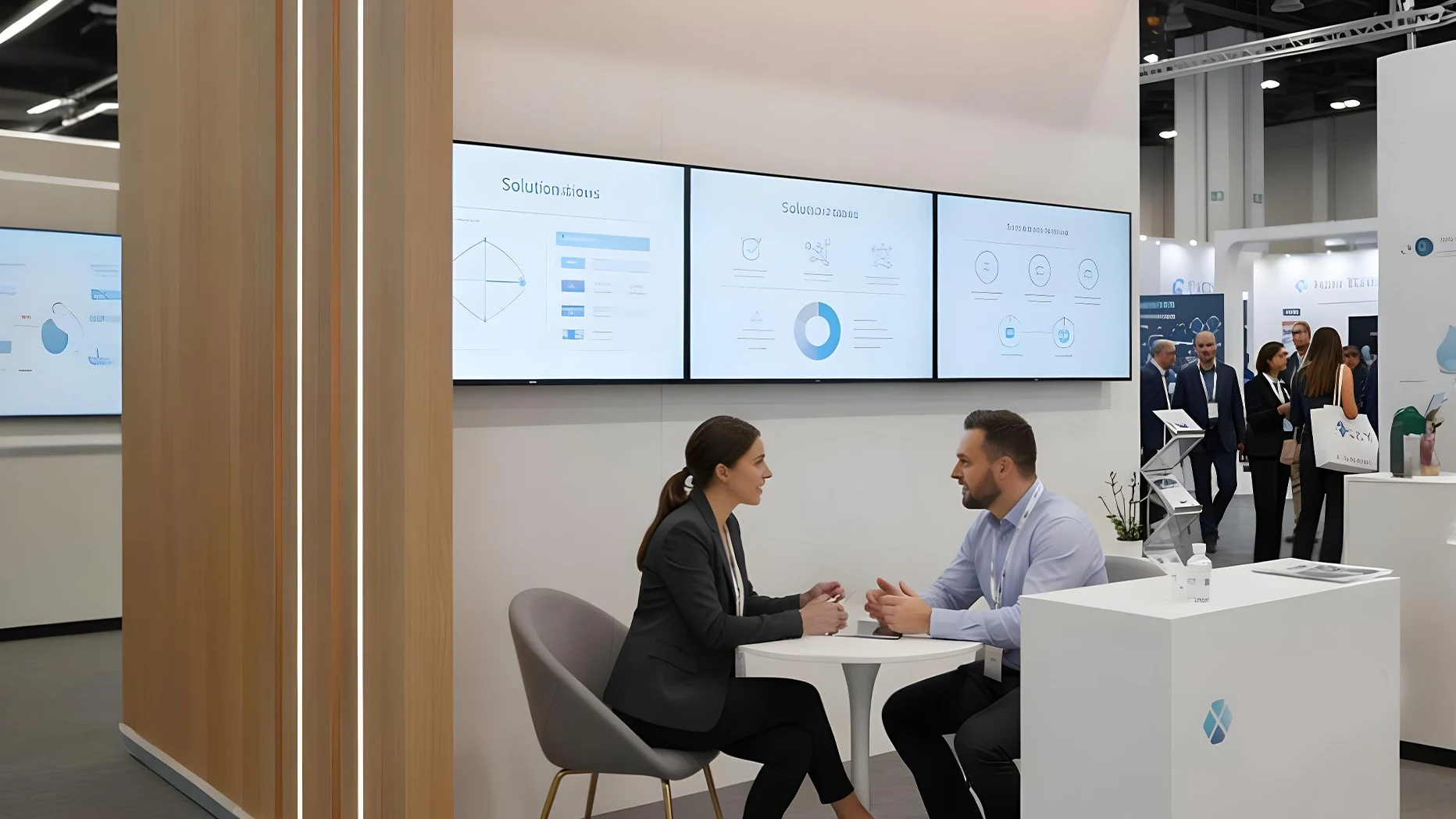
Modern trade show booth marketing isn’t about selling products; it’s about solving problems. When brands design their booths around real customer challenges, through thoughtful design, storytelling, and interaction, they turn their exhibition space into a place of discovery, understanding, and trust.
Most brands still see trade shows as stages for display. They arrive with bright banners, rehearsed slogans, and perfectly stacked brochures, yet leave wondering why only a few conversations felt real. The truth is, visitors don’t come to trade shows just to look. They come with questions, frustrations, and needs.
The most effective exhibitors know this. They treat every booth like a workshop, not a billboard. Their stands don’t just showcase what they sell; they quietly answer what customers have been asking all along. That’s the real power of trade show booth marketing, transforming a few square metres of space into a problem-solving experience.
In this guide, we’ll explore how modern booth marketing helps brands connect deeply with visitors before, during, and after the show, and why understanding beats convincing every time.
From Selling to Solving: The New Trade Show Mindset
The best exhibitors don’t push products; they uncover needs.
There was a time when exhibitions were built around product features and loud claims. But in 2025, the tone has changed. Audiences have become sharper, with more choices and less patience for generic pitches. What they want is empathy, exhibitors who listen first and speak after.
This is where trade show booth marketing shines. When done well, it positions your brand as a trusted partner rather than a passing vendor. A booth designed around customer needs naturally draws fewer browsers but far better conversations.
At EMS Exhibitions, we’ve seen this shift in real time. Booths that prioritise understanding over selling consistently see longer dwell times, higher engagement, and stronger post-show relationships.
Knowing the Problem Before the Show Begins
Good booth marketing starts long before the lights come on.
The foundation of every strong exhibit lies in preparation. Before the first visitor walks in, great brands already know who they’re talking to and what those people are trying to solve.
Pre-show research can include customer surveys, social media insights, or even analysing past trade show interactions. Once you understand your audience’s pain points, your booth becomes more focused. The signage speaks their language. The demos feel relevant. Even the staff sound more helpful because they know what matters most.
For example, a company specialising in sustainable packaging might highlight how it helps reduce waste rather than just listing materials. A technology firm might focus its displays on saving time, not just showing features.
With Custom Exhibition Stands, you can tailor every zone of your booth to a specific visitor journey, guiding people from curiosity to clarity in minutes.
Design that Demonstrates Solutions
Your space should speak before your staff does.
A good trade show booth design doesn’t just look attractive; it solves. The layout, lighting, and materials each play a role in communicating what your brand does best.
Think about it: a company selling transparency software might use glass panels and open spaces to express clarity. A wellness brand could design calm corners with soft textures and natural tones to mirror peace of mind. Design becomes silent storytelling.
Technology deepens this experience. With AV Hire London, exhibitors can use touchscreens or short videos to walk visitors through solutions step by step. When design explains your value, your team can spend more time talking about deeper needs instead of introductions.
In the end, the booth becomes a mirror for what your customers want most, not just what you want to show.
Engaging Conversations that Uncover Real Needs
The best booths sound more like conversations than pitches.
People remember how they felt, not what they were told. That’s why trained, approachable staff are often a brand’s strongest marketing tool. Instead of scripted greetings, they use questions: “What’s your biggest challenge right now?” or “What’s been hardest to solve lately?”
Those questions shift the energy immediately. Suddenly, it’s not a transaction, it’s a collaboration.
Booth layout supports this, too. Comfortable seating, a bit of privacy, and the right layout encourage visitors to stay longer. Adding touches from Event Furniture Hire (stools, lounge chairs, or high tables) can transform the space into a natural meeting zone rather than a high-pressure display.
When your booth feels like a safe space to talk, visitors share more. And what they share often becomes the foundation for your next great product or campaign.
Storytelling as a Bridge Between Problem and Solution
Stories show people what change looks like.
Once you understand your customer’s challenge, storytelling turns your solution into something relatable. Instead of listing technical features, you can show outcomes.
A logistics company might tell a story about how one client cut delivery times by 30%. A skincare brand could display customer testimonials that show transformation. Videos, photos, and subtle motion graphics reinforce what words can’t convey: emotion.
Modern trade show booth marketing relies heavily on brand storytelling. It blends visuals, sound, and tone to help visitors imagine themselves in a better place, one that your product made possible.
The right story doesn’t just inform; it invites the visitor to believe they’ve already found the answer.
Follow-Up That Feels Like Help, Not Hype
Your booth experience shouldn’t end at the exit.
After the show, how you follow up defines whether that good first impression turns into lasting trust. Instead of the typical “Thanks for visiting” email, send something useful: a short guide, a case study, or a personalised offer that relates to what you discussed.
Think of post-show engagement as a continuation of the problem-solving journey. You helped someone start thinking differently at the booth; now you help them take the next step.
A brand that follows up with empathy and relevance builds relationships that extend far beyond the trade show floor.
Measuring Success Beyond the Lead Sheet
Real success is measured in trust, not traffic.
Leads are important, but they’re only one piece of the puzzle. The deeper value of exhibition marketing lies in how well it improves your understanding of your audience.
Track how long visitors stayed, which questions they asked most often, and how many meaningful conversations your team had. These insights often reveal what’s working and what needs refining before the next show.
According to Event Industry News, more than 70% of exhibitors say live engagement gives them better customer insights than any online channel. That kind of knowledge can reshape entire marketing strategies.
Building Problem-Solving Booths the Smart Way
Every design choice can help someone find an answer.
Creating a booth that truly helps visitors means thinking beyond aesthetics. It’s about flow, accessibility, and comfort. Every light, chair, and display should earn its place.
That’s why EMS Exhibitions offers complete solutions, from Shell Scheme Hire for efficiency, to Custom Exhibition Stands for impact, and AV Hire London for immersive storytelling. Combined with Event Furniture Hire, the result is a stand that feels less like a setup and more like a service.
When your booth feels like help, not hype, visitors don’t just stop by. They stay.
The Booth That Becomes an Answer
When your booth feels like help, people remember.
Trade show success isn’t about how many people pass your stand; it’s about how many walk away with solutions. In a world full of products, people remember the brands that understood their problem first.
That’s the beauty of trade show booth marketing: it transforms your exhibit from a sales stage into a real conversation. It’s empathy made visible, through light, layout, and dialogue.
So when you plan your next exhibition, start with one simple question: what problem do we solve best, and how can we show that in three minutes or less? Because once your booth feels like the answer, you’ll never have to chase attention again.
FAQs
What is trade show booth marketing?
It’s the art of using booth design, storytelling, and interaction to connect your brand with customer needs at live events.
How can a booth solve customer problems?
By showing real solutions through demos, design cues, and conversations that address visitor pain points directly.
What design features improve engagement?
Open layouts, soft lighting, interactive screens, and comfortable seating help create a space people want to explore.
How can I make small stands effective?
Use vertical displays, focused messaging, and modular systems to make the most of limited space without crowding it.
What metrics prove exhibition marketing success?
Beyond leads, track engagement length, meaningful interactions, and post-show conversions to measure real impact.