
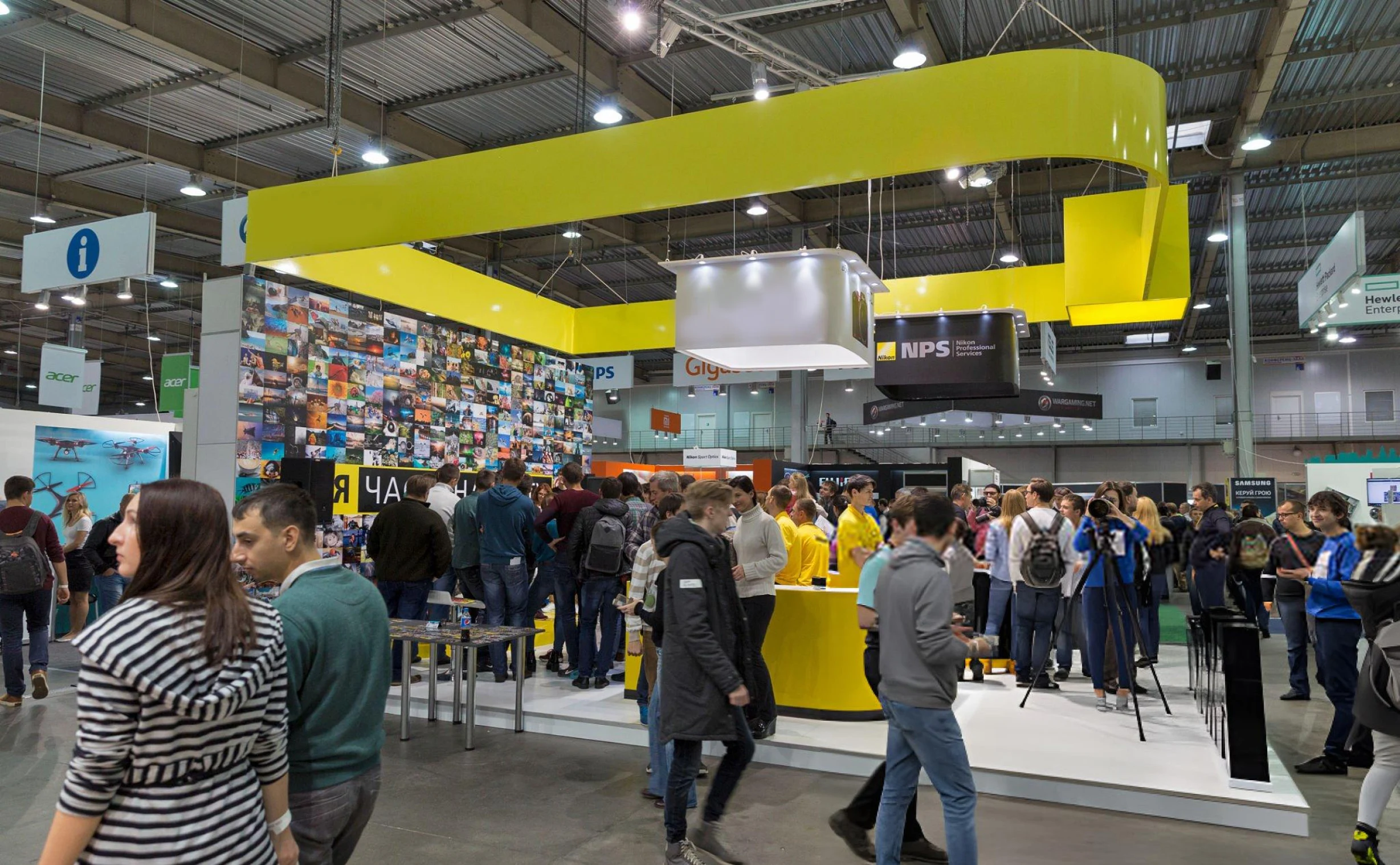
Have you ever poured your heart (and budget) into an exhibit only to see prospects walk by with barely a glance? It happens when your exhibit doesn’t resonate with the prospect.
When planning trade shows and corporate events, grabbing attention is only half the battle. The real goal? Making your exhibit resonate. You want people to walk in, stay longer, and walk out remembering you.
Whether you are promoting a tech product or a new service, your exhibit needs more than flashy lights. It needs meaning. It needs a connection.
What Does It Mean For An Exhibit To Resonate?
Before fixing it, let’s first define it. A resonating exhibit is not just visually appealing; it speaks to your audience’s needs, goals, and pain points. It emotionally connects. It creates an experience. When your exhibit resonates:
- People stop.
- They engage.
- They ask questions.
- They remember you days later.
- They tell others about your brand.
This is especially important if you are offering niche services. Your audience may not even know they need you until your exhibit helps them feel the need.
Where corporate events are booming, standing out is even more essential.
So, let’s break down the key insights to figure out whether your exhibit is truly resonating with prospects. Let’s dive in.
1. Start By Knowing Your Audience
You can’t make something resonate unless you know who you are talking to. That is the first step. Ask yourself:
- Who are my ideal prospects?
- What keeps them up at night?
- What solutions are they actively looking for?
- What language do they use to describe their problems?
For example, if you are showcasing a business product, your audience might include:
- HR managers.
- Company founders.
- Health and safety officers.
- Culture and engagement leaders.
There is a chance your audience may be focused on retaining talent in a competitive job market or boosting team performance post-COVID. That insight gives you a sharper message and a more powerful booth design.
2. Are You Saying What They Need To Hear?
Once you understand your audience, your messaging needs to talk to them, not just about you. One of its bad examples is
We offer premium corporate wellness programs.”
A better example is: Are you struggling with low employee energy? We help teams feel better, work better, and stay longer.” Great exhibit messaging:
- Uses simple, clear language.
- Highlights the benefits, not just features.
- Ask engaging questions.
- Includes pain points your audience has.
- Uses verbs and emotional words.
Quick tip: instead of a big paragraph, try large, clear headlines with bullet points like:
- Boost staff productivity by up to 25%.
- Reduce sick days and burnout.
- Create a culture of wellness that your team will thank you for.
Make your messaging local and relevant. People connect faster when they feel “seen.”
3. Is Your Booth Design Helping Or Hurting You?
Your booth design is not just decor. It is your first impression. And it plays a huge role in whether someone even bothers to stop. Here is what works:
- Clean layout: not too crowded, not too empty.
- Strong visuals: high-quality graphics that reflect your brand.
- Interactive elements: touch screens, wellness demos, product trials.
- Lighting should be bright enough to feel alive and soft enough to feel welcoming.
- Comfort zones offer a place to sit or recharge, encouraging longer visits.
For example, if you are promoting corporate wellness programs, you could create a calming space with aromatherapy, soft lighting, and quick breathing exercises. That instantly resonates more than a simple brochure stand. Don’t forget your branding. Your logo, slogan, and colour schemes should be cohesive and memorable, whether you are in New York or exhibiting elsewhere.
4. Are You Sparking Two-Way Conversations?
Great exhibits are not monologues; they are conversations. And the best conversations start with curiosity. How to make that happen:
- Train your booth staff to ask open-ended questions.
- Offer something to discuss, a game, a quiz, or a wellness scanner.
- Make space for dialogue, not just sales pitches.
Here are some powerful conversation starters:
- What is your team’s biggest challenge right now?
- Have you ever tried a corporate wellness strategy before?
- What is your current approach to employee retention?
If you are targeting clients interested in corporate wellness programs, focus on real pain points like stress, retention, or hybrid team challenges. Then show how your offer fits into their world.
5. Are You Measuring Engagement?
Foot traffic is nice, but it is not everything. Engagement is the real metric you need to track. Key engagement indicators:
- How many people asked for more info or gave their email?
- How long did visitors stay at your booth?
- How many meaningful conversations did you have?
- How many follow-up calls were scheduled?
Use lead capture tools or even simple notecards to note down:
- Prospect’s pain points.
- Their level of interest.
- The budget or decision timeline.
Tracking this helps you understand which part of your exhibit worked and what fell flat. This gives you valuable data for follow-ups and future exhibits.
6. Add Value Before They Even Ask
Want your exhibit to stand out? Offer value immediately before the pitch even begins. Examples:
- A free “team burnout checklist” for HR managers.
- A 2-minute stress relief demo or a branded massager giveaway.
Not only does this make your brand helpful, but it also makes it memorable. And when someone gets value on the spot, they are more likely to remember you when they are ready to invest in corporate wellness programs.
7. Post Event Follow Up: Are You Continuing The Conversation?
Even the most engaging booth means little if the follow-up falls flat. Don’t let the relationship die after the handshake. Post-event tips:
- Send a personalised email within 24-48 hours.
- Share something useful, a blog, a webinar invite, or a free audit.
- Keep the tone friendly and human, not robotic.
- Ask how you can support them further.
How is your service uniquely suited to the needs of local businesses, from seasonal stressors to regional employee engagement trends? Following up with relevance is how you turn booth interest into real business.
Final Thoughts: Make It About Them, Not Just You
In the end, an exhibit that resonates puts your prospect first. It is not about how impressive your booth looks; it’s about how well it communicates value, builds trust, and invites connection. Ask yourself:
- What problem are we solving for the visitor?
- What emotion do we want to evoke?
- What action do we want them to take?
When you answer these questions honestly and build your exhibit around them, your brand will not just be seen, it will be remembered.