
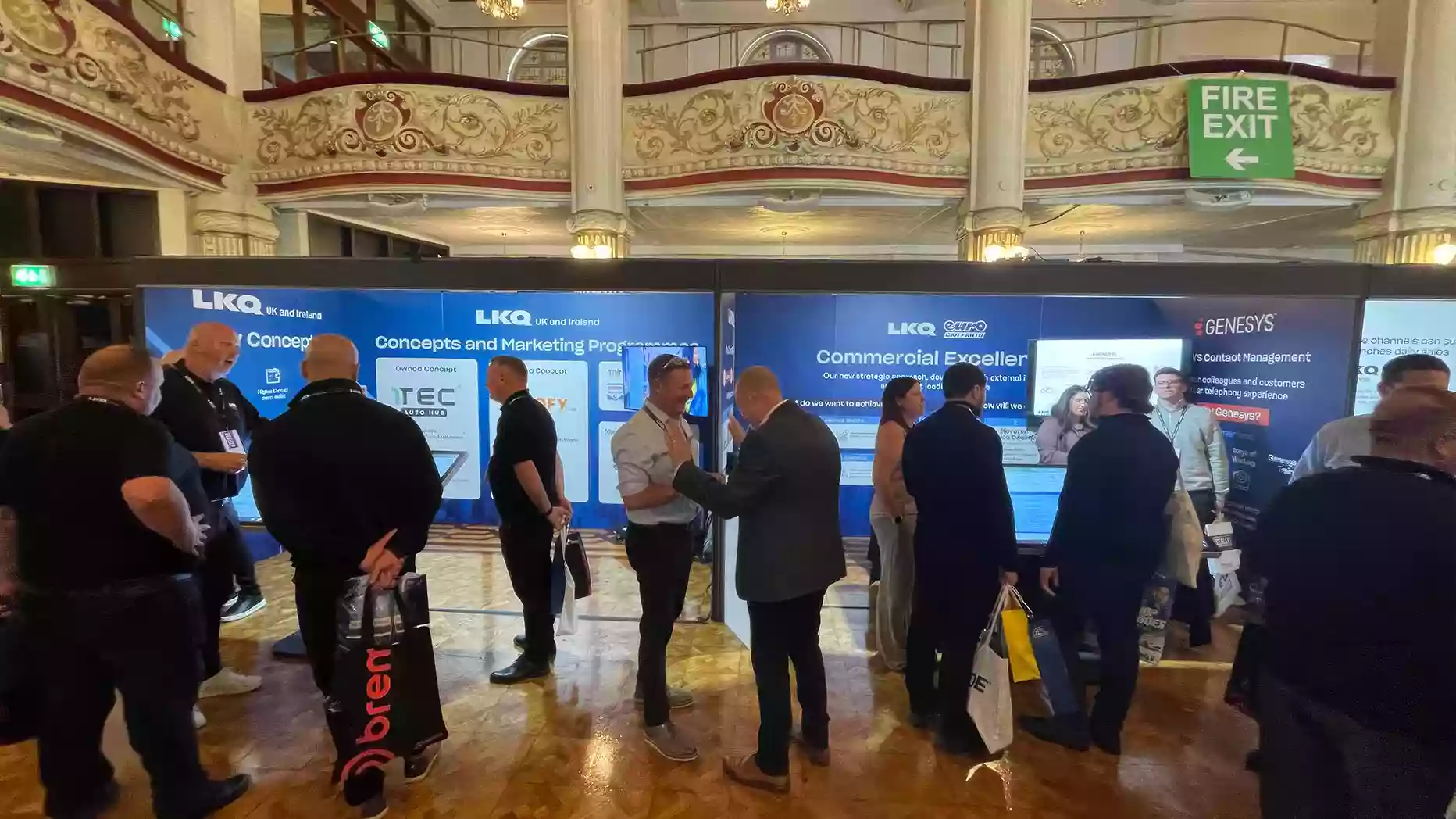
To be successful at face-to-face marketing at trade shows, you need a clear goal, a stand that is easy to understand, staff who can start useful conversations, and a fast follow-up plan. The best exhibitors do not wait for luck. They prepare before the show, engage during it, and act quickly after it.
Trade shows still give brands something digital channels cannot fully copy: live attention, real reactions, and honest conversations in the same room. The Association of Event Organisers says 87% of business directors find it easier to communicate face to face than by phone, email, or FaceTime. In the UK, that matters because exhibitions still bring huge audiences together.
At EMS Exhibitions, we have seen this up close for decades. We have been operating since 1997 from Southwark, London, with a team of 30 professionals, in-house graphics production, our own transport fleet, full installation support, and a large stock across shell scheme, AV and display board hire.
Why Face-To-Face Marketing Still Delivers Results
Digital marketing channels are noisier than ever. Inboxes are overloaded, paid ads face banner blindness, and cold outreach conversion rates continue to fall. Trade shows cut through that noise in a way no screen can replicate.
According to industry research, 71% of SMEs have won new business directly through face-to-face networking at trade shows. More compellingly, 67% of trade show attendees represent prospects that exhibiting companies have never reached before through any other marketing channel. On top of that, 81% of attendees hold direct purchasing authority, meaning the conversations you have on the show floor are with people who can actually say yes.
The UK exhibition sector contributes over £4 billion to GDP and supports around 100,000 jobs, according to industry reports. This is not a niche channel. For B2B businesses in particular, trade shows remain one of the highest-returning marketing investments available, provided you approach them with the right strategy.
How Can You Be Successful At Face-To-Face Marketing At Trade Shows?
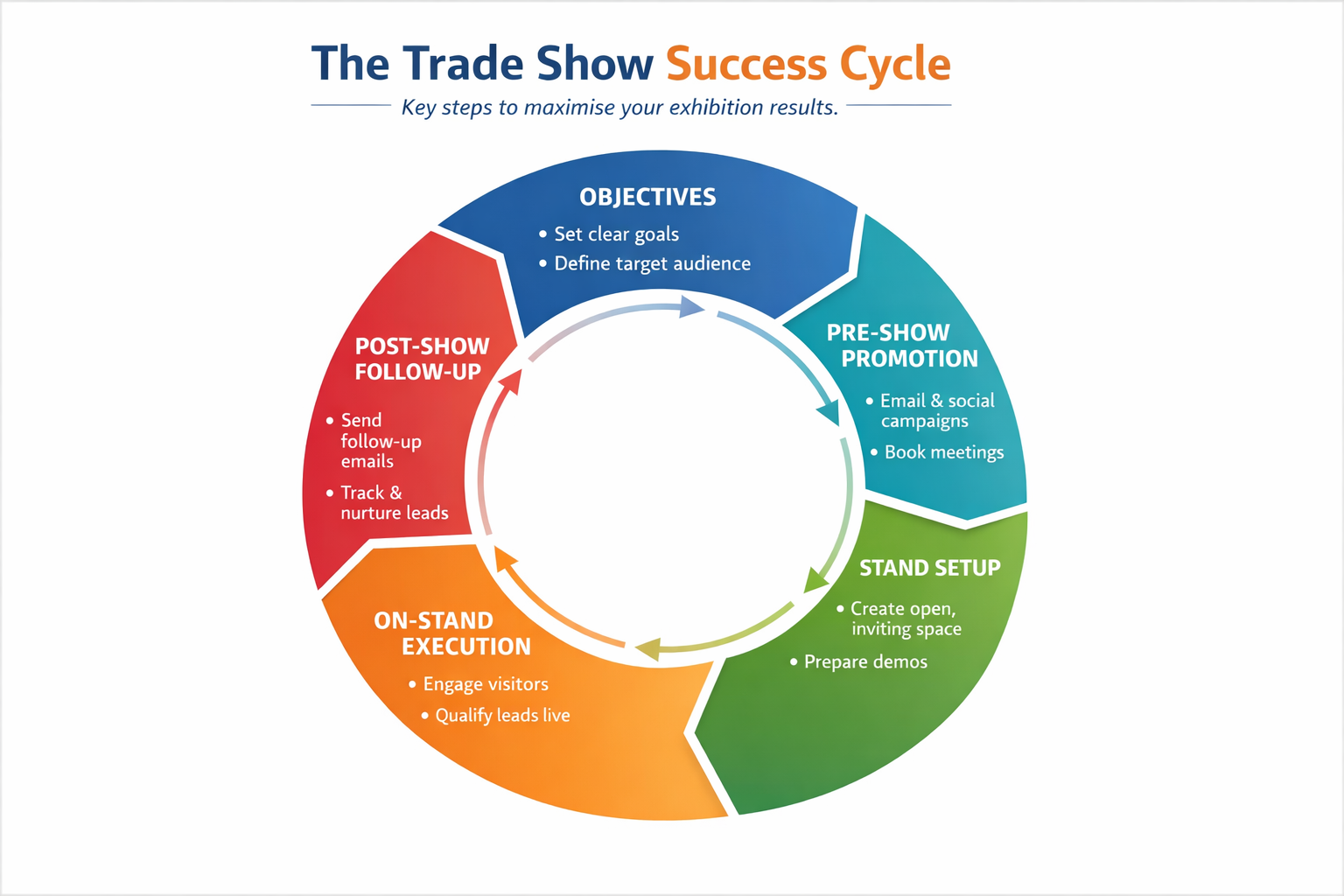
Success comes from four things: the right visitors, the right stand message, the right conversations, and the right follow-up. If people can understand what you do in seconds, speak to a confident team member, and hear from you again quickly after the event, your chances of turning interest into leads rise fast.
Before The Show: Preparation Is Your Competitive Edge
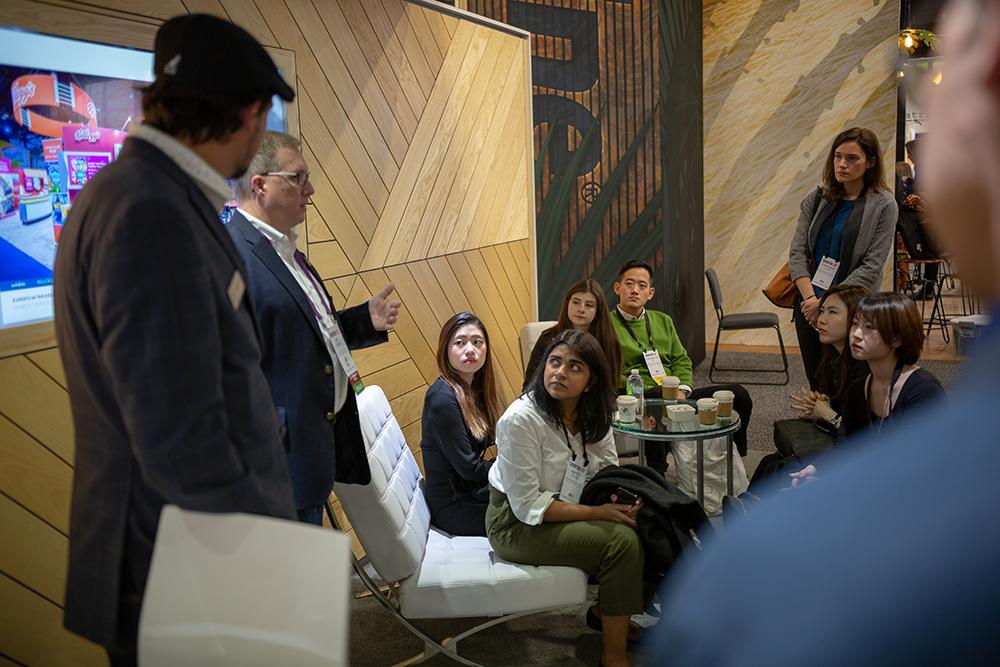
The exhibitors who perform best at trade shows have one thing in common: they arrive thoroughly prepared. The show floor itself is only the visible part of the process. The work that drives results happens in the weeks and months beforehand.
- Set Clear, Measurable Objectives
Before you book your stand space, define what success looks like. Is it a specific number of qualified leads? Meetings with named target accounts? Product demo requests? Partnerships with distributors?
Vague objectives produce vague results. If your team knows they need to book 15 product demos and capture contact details from 40 qualified prospects, they will behave very differently on the floor than if the brief is simply ‘make a good impression.’
- Research Your Audience And The Show
Not every trade show is the right fit for your business. Before committing, check the attendee profile from the previous year’s event, the exhibitor list, and any published figures on visitor seniority and purchasing authority. The busiest months for UK trade shows are March, September, October, and November. Make sure your show selection aligns with your sales calendar.
- Promote Your Attendance In Advance
Most exhibitors wait for visitors to come to them. The most successful ones drive visitors to their stand deliberately. Tell people where you will be, what you are showing, and why it is worth visiting. In the four to six weeks before the show, use:
- Email campaigns to existing contacts and target accounts announcing your attendance.
- LinkedIn posts and organic social content to build anticipation around what you will be showcasing.
- Show directory listings and early-bird meeting request tools, where the organiser provides them.
- Pre-booked meetings with priority prospects so your diary has structure before you arrive.
A stand with a queue draws more visitors. Start building that queue before the doors open.
Stand Design: Making The Right First Impression
Research consistently shows you have around seven seconds to make an impression on an attendee walking past your stand. Your stand is not just a backdrop; it is an active marketing tool, and it needs to work hard.
- Clarity Over Clutter
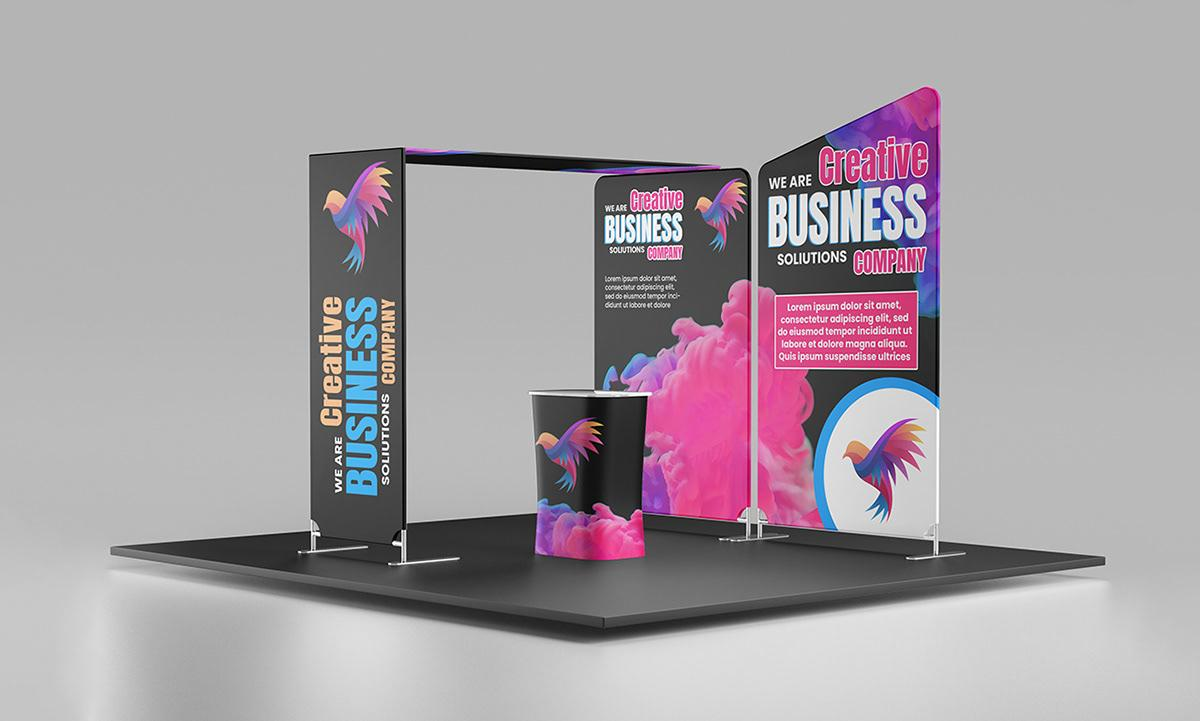
One of the most common mistakes exhibitors make is trying to communicate too much. Your stand graphics should deliver a single, clear message that an attendee can read and understand at a glance from three metres away. What do you do? Who do you do it for? Why should they stop and talk to you?
At EMS Exhibitions, our in-house exhibition graphics & printing team works directly with exhibitors to produce stand graphics that are visually sharp and strategically focused. With over 10,000 square metres of printed graphics delivered annually, we understand what works on a busy show floor versus what looks impressive on a screen but fails in practice.
- Layout And Flow
Open stands invite visitors in. Closed, cluttered layouts push them past. Regardless of whether you are working with a shell scheme or a custom-built structure, the layout should:
- Have a clear, open entrance point with no obstacles blocking the front.
- Place your most engaging element, a product demo, a screen or an interactive display, where it is visible from the aisle.
- Include a defined area for private conversations or one-to-one meetings.
- Give staff room to move and engage without looking cramped.
Our shell scheme and custom stand solutions, available from our Southwark warehouse, are designed with these principles built in. From the octa fabric panel system to full custom-build structures, we provide the physical framework; your team brings it to life.
- Technology That Earns Its Place
Screens and AV equipment can significantly increase dwell time and engagement at your stand, but only when used purposefully. A looping product video with no sound, or a presentation playing to an empty stand, adds cost without adding value.
Consider instead: a screen showing live product demos triggered by staff interaction, a digital display board cycling through customer case studies and key statistics, or a presentation suite for scheduled meetings. Our exhibition AV hire service covers everything from 32-inch Samsung display screens through to LED video walls, deployed with full installation support, so your team can focus on the visitors, not the cables.
On The Day: How To Work The Stand Effectively
Your stand is set. The doors are open. Now the real work begins.
- Train Your Team Before The Show
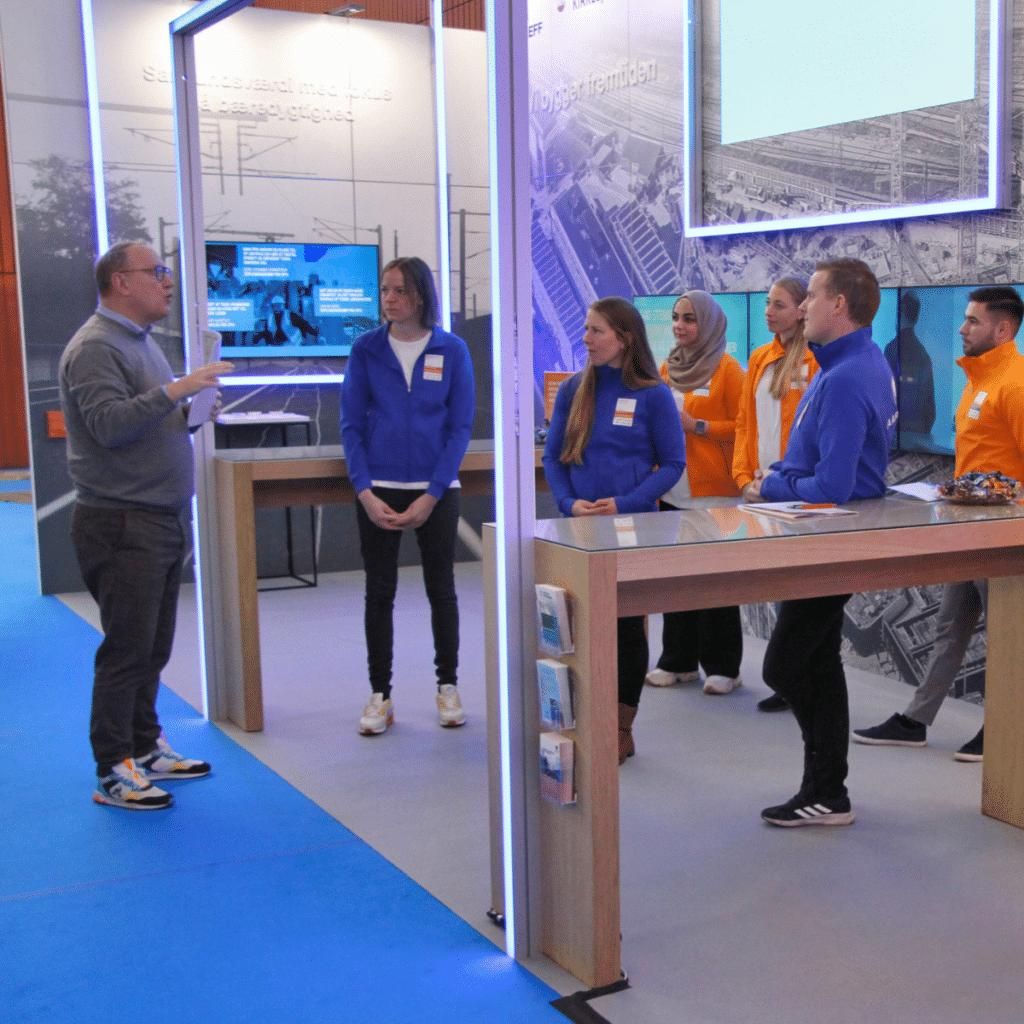
The most beautifully designed stand in the hall will underperform if the team staffing it is unprepared. A good booth team should look open, alert, and ready to help. A poor booth team looks tired, distracted, or too eager to sell.
Brief your staff on:
- Welcome people quickly.
- The show objectives and individual targets.
- The qualifying questions to ask every visitor (role, company, buying timeline, decision-making authority).
- Keep the key messages for each product or service to a 90-second overview.
- Listen before explaining.
- How to handle the lead capture process, including what information to collect and how.
- Record useful lead notes.
- How to disengage politely from unqualified visitors to keep the stand moving.
Also consider physical preparation. Standing for eight hours is tiring. Rotating staff every two to three hours, keeping energy levels up, and ensuring everyone has eaten properly will have a measurable impact on the quality of conversations by mid-afternoon.
Better opening lines
Avoid:
- “Can I help you?”
- “Would you like a brochure?”
- “Are you interested in our services?”
Try:
- “What brought you to the show today?”
- “What are you looking to improve this year?”
- “Are you comparing suppliers or looking for ideas?”
These questions are easier to answer and lead to better conversations.
- Keep the team brief simple
Before the show, every staff member should know:
- The main goal.
- The target visitor.
- The opening question.
- The key proof points.
- How to qualify a lead.
- What happens after the conversation?
At EMS Exhibitions, we often see the best results when exhibitors keep this training simple and practical. A polished script is less important than confidence, clarity, and consistency.
- Qualify, Don’t Just Collect
The goal is not to collect as many business cards as possible. The goal is to identify the right prospects. A stand with 20 highly qualified leads is worth more than one with 200 unfiltered contacts.
Use a simple qualification framework, something as straightforward as role, company size, budget timeframe, and current supplier, and note it against each lead at the point of capture. This transforms your post-show follow-up from a generic broadcast into a targeted, relevant conversation.
- GDPR-Compliant Lead Capture
Under UK GDPR, you need a lawful basis to contact individuals after the event. The simplest approach for trade show leads is explicit consent, a badge scan, or form sign-up with a clear opt-in statement. Make sure your lead capture process includes this, and that your privacy notice covers post-event marketing communications. This is not optional: non-compliant follow-up undermines the trust you have just spent a full day building.
Post-Show Follow-Up: Where The Business Actually Gets Won
Industry data consistently shows that 80% of trade show leads are never followed up. This is the single biggest source of wasted exhibiting investment in the UK, and it is entirely avoidable.
Follow-up should begin within 24 to 48 hours of the show closing. After that window, your recollection of individual conversations fades, and so does the attendee’s memory of your stand.
Segment Your Leads Before You Follow Up
Not every lead is ready for the same conversation. Segment your contacts into:
- Hot leads: Decision-makers with a clear need, short timeline, and budget confirmed. Call them first.
- Warm leads: Good fit, engaged conversation, but longer timeline or further up the decision chain. Personalised email with relevant follow-up material.
- Cold leads: Early-stage enquiries or information gatherers. Add to a nurture sequence and revisit in 60–90 days.
Make Your Follow-Up Personal
Reference something specific from your conversation. The personalisation does not need to be elaborate; mentioning the challenge they raised or the product they showed interest in is enough to stand out from the generic ‘Great to meet you at [show name]’ emails that flood inboxes after every event.
Industry research shows it takes an average of 3.5 sales calls to close an exhibition lead, compared to 4.5 for a cold outreach contact. The groundwork you lay on the show floor gives your follow-up a significant head start.
Measuring Your Trade Show ROI
You cannot improve what you do not measure. After every show, calculate your cost per lead, cost per qualified lead, and, once your pipeline matures, cost per new customer acquired. Compare these against your other marketing channels to build an honest picture of trade show ROI.
Track which shows deliver the best quality leads, not just volume. Over two or three years, this data will allow you to concentrate your exhibiting budget on the events that consistently produce results, and to walk away from those that do not.
On average, trade shows contribute around 33% of a company’s new business each year, according to CEIR research. That is a significant proportion, and one that justifies treating your exhibition programme as a serious, managed investment rather than an annual habit.
Common Mistakes That Weaken Face-To-Face Marketing
Here are the mistakes we see most often:
1. No Clear Message
If visitors cannot tell what you do quickly, they keep walking.
2. Staff Waiting Instead Of Engaging
Phones, crossed arms, and private chats all reduce approachability.
3. Too Much Selling Too Early
People want a conversation, not a pitch in the first ten seconds.
4. No Lead Qualification
Without notes and categories, good contacts get lost.
5. No Follow-Up Plan
The event ends, the inbox fills up, and strong opportunities cool down.
Ready To Make Your Next Exhibition Count?
Whether you are planning your first exhibition stand or refreshing your approach after a quiet few years, getting the physical setup right is the foundation on which everything else builds. A professional, well-designed stand signals credibility from the moment visitors walk past, and credibility is what turns a passing glance into a conversation.
At EMS Exhibitions, we have been helping exhibitors across the UK create that impression since 1997. From shell scheme hire and custom stand builds to in-house graphics, display boards, furniture, AV equipment, and on-site electrics, we handle the setup so you can focus on the people.
Get in touch to discuss your next event:
- Call us on 0207 820 8006.
- Request a quote at [email protected].
FAQ
What Is Face-To-Face Marketing At Trade Shows?
Face-to-face marketing at trade shows is the practice of meeting prospects, customers, and partners in person at an exhibition to explain your offer, answer questions, build trust, and move people towards a buying decision. It combines stand design, live conversation, product proof, and follow-up.
How Do You Attract More Visitors To Your Trade Show Stand?
Use a clear headline, strong graphics, an open layout, and a reason to stop, such as a demo, sample, or useful question. Then train staff to start natural conversations instead of waiting for people to approach.
How Do You Follow Up Trade Show Leads Effectively?
Follow up within 24–48 hours of the show closing. Segment leads by qualification level, hot, warm, and cold, and tailor your outreach accordingly. Reference specific details from your conversation to make the follow-up feel personal rather than generic. Use phone calls for hot leads, personalised emails for warm contacts, and a structured nurture sequence for early-stage enquiries. Always ensure your follow-up is GDPR-compliant.
What Should Staff Do At A Trade Show Stand?
Staff should welcome visitors, ask short open questions, listen carefully, explain the offer simply, qualify interest, and agree on a next step. They should not stand in groups, look at phones, or give the same pitch to everyone.
How Much Do Exhibition Stands Cost in the UK?
Exhibition stand costs in the UK vary widely depending on stand size, build type, and the level of customisation required. A shell scheme package covering panels, graphics, furniture, and electrics can be cost-effective for smaller spaces, while custom-built stands offer greater brand impact for larger floor areas. Contact EMS Exhibitions on 0207 820 8006 for a tailored quote based on your specific event and requirements.