
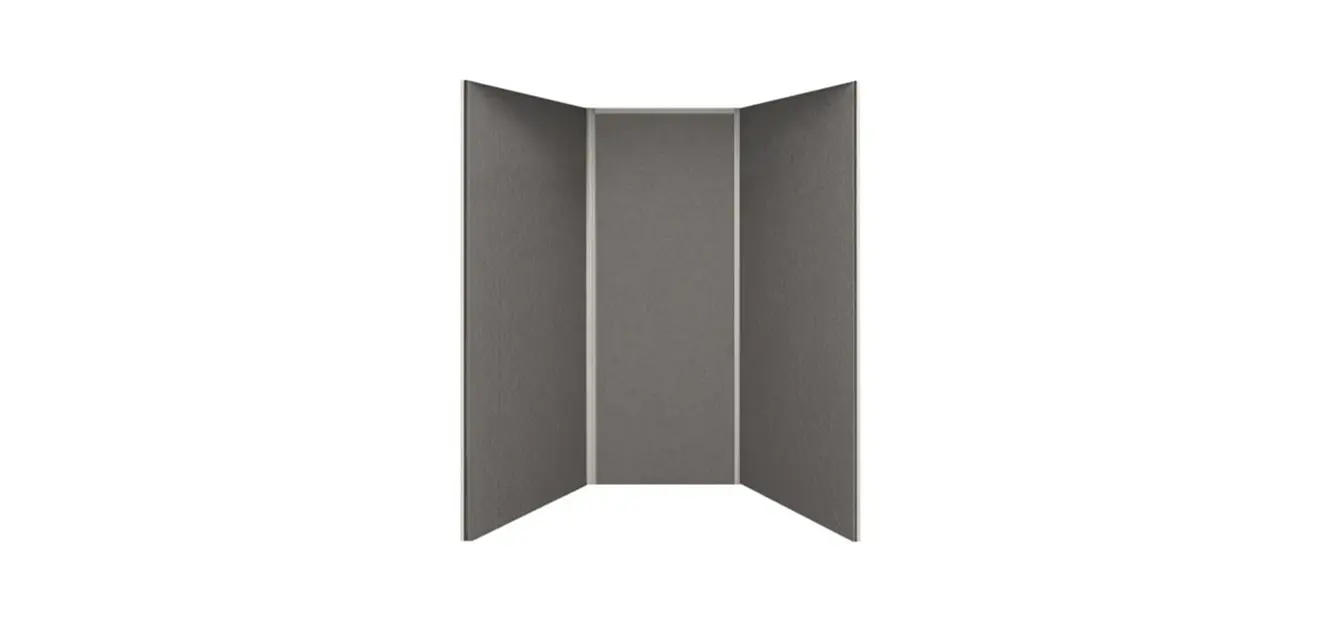
Winged display panels are angled side panels attached to a main display wall. They adddepth, dimension and visual flow to an exhibition stand, helping it capture attention and guide visitors into the space in a way flat panels can’t.
In a busy exhibition hall, dozens of stands can start to look the same. Graphic walls, pop‑up banners and plain backdrops blur together as visitors walk past, scanning but rarely stopping. Then you spot one that’s different: it reaches out, invites you in, and feels like more than just a wall with a logo.
That’s the wonder of winged display panels.
This blog looks at what these panels are, why they work, how to use them effectively and how they fit into thoughtful exhibition design.
What Are Winged Display Panels?
Winged display panels are additional display elements that extend from your main exhibition wall at an angle, creating a three‑dimensional shape that signals movement, frames visual content and makes your stand feel more inviting.
Unlike traditional flat panels that sit in a line, winged panels “open up” the face of your stand. Think of a painting (flat) versus a sculpture (3D). The wings create planes that catch the eye from multiple angles and invite exploration.
These can be fixed or adjustable, wide or narrow, large or small, depending on your space and exhibit goals. They’re usually part of larger modular or shell scheme structures, but can also be built as part of custom stands.
Why Winged Panels Work – The Psychology of Depth and Engagement
Winged panels work because humans are drawn to depth, perspective and visual hierarchy. Three‑dimensional forms interrupt visual noise and encourage people to slow down, look and step in.
At a trade show, attendees make split‑second decisions about where to stop. A flat wall registers, a winged shape engages. Exhibition design guides often make the same point: well-designed displays aren’t just seen, they’re experienced, and winged elements help create that.
Adding wings to a panel transforms your display from a static backdrop into something with implied motion. It:
- Breaks up the monotony of straight lines in aisles.
- Creates visual pockets and sightlines that guide the eye.
- Let’s you divide content logically (storytelling panels, product highlights, calls to action).
In effect, winged panels give your stand a form that thought‑leaders in exhibition design describe as crucial for grabbing attention before someone even reads a word.
Practical Uses of Winged Display Panels
Use winged panels to create zones, highlight key content, direct foot traffic, enhance storytelling and make your brand more memorable in a crowded hall.
Here’s how they make a real difference:
1. Create Natural Zones
Rather than a single big wall, wings can define “spaces” within your stand, a product zone, a demo area, a handshake space, without erecting full walls.
2. Guide Visitor Movement
Angled panels act like silent ushers, pointing visitors deeper into your booth and presenting information in a controlled order.
3. Boost Key Messaging
Each collected surface becomes a stage for a different visual or text message, making storytelling easier and more structured.
4. An Air Of Professionalism
A winged setup makes a 3×3 or 6×3 shell scheme stand feel larger and more considered, helping small and medium exhibitors punch above their weight.
Design Best Practices For Winged Display Panels
Design winged panels with brand cohesion, clear hierarchy, readable graphics and good lighting so they enhance rather than overwhelm your message.
Here are the practical design rules many experienced exhibition designers follow:
1. Keep Branding Consistent
Use the same colour palette, fonts and visual identity across all panels. Cohesion helps visitors understand your brand instantly.
2. Establish Visual Hierarchy
Place your most important message on the main panel or the wing that first faces foot traffic. Secondary messages go on adjacent wings.
3. Size The Wings To Your Space
Wings that are too big can make a stand feel cluttered; too small, and they won’t be noticed. Work with your exhibition partner to balance scale and sightlines.
4. Use High‑quality Prints And Materials
Sharp, vibrant graphics make the difference between a design that catches the eye and one that fades into the background. Aim for quality materials and crisp printing.
5. Light It Well
Even the best design can look flat in bad lighting. Use directional lighting or spotlights to add drama and make panels stand out.
Common Mistakes To Avoid
Avoid winged panels that are too busy, poorly lit or mismatched with your brand; these will confuse visitors rather than attract them.
Here’s what to watch for:
- Too much text is crowded onto each panel.
- Visuals that can’t be read from a distance.
- Conflicting fonts or colour schemes that weaken brand recall.
- Panels that block traffic flow or create visual clutter.
Design simplicity isn’t simplicity of thought; it’s clarity for the visitor, and winged displays should act as visual helpers, not obstacles.
How Winged Panels Fit Into Your Full Exhibition Stand?
Winged display panels complement other stand elements, like counters, meeting spaces and AV to create a coherent, inviting experience that feels intentional and memorable.
Think of them as chapter breaks in your stand story:
- A welcome area with a bold title on the main panel.
- A product section framed by two angled wings.
- Angled graphics subtly indicate a demo zone.
- A call‑to‑action area that feels like the final visual destination.
When combined with good lighting, furniture, flooring and interactive elements, winged panels help make your space readable the moment someone approaches, which boosts dwell time, engagement and recall.
Experienced exhibition partners in the UK, like trade show service providers in London, can integrate winged panels into shell scheme stands or custom exhibitions. As a result, your layout feels purposeful from the moment visitors arrive, no guessing where to walk or what you offer.
Design With Purpose, Not Just Presence
Your first impression is your last impression, which can make or break your event’s success. Adding winged display panels can be a smart move. They give your stand a dynamic, 3D look that instantly grabs the audience’s attention. No matter where you are exhibiting and what business you are running, choosing this would definitely give you an edge. And the best part is? They are adaptable, reusable, and designed to grow with your business.
If you:
- Use winged panels to guide rather than clutter.
- Keep your messages simple and easy to read.
- Integrate them with your overall brand and spatial plan.
- Light them well and keep graphics sharp.
…you’ll create a stand that doesn’t just sit in the hall, it competes for attention and invites exploration.
The best displays are the ones visitors remember long after the event ends.
So, if you want your next exhibition stand to feel clearer, more inviting, and easier to navigate, winged panels are worth considering. Work with seasoned exhibition stand contractors now like Ems-Exhibitions, who understand the market and bring years of experience to the table.
FAQs
Are winged display panels suitable for small exhibition spaces?
Yes, winged display panels are highly suitable for small exhibition spaces because their design helps maximize visual impact, create depth, and direct visitor flow in compact areas.
What materials work best for winged panels?
The best materials for winged display panels in exhibitions are usually lightweight and durable, such as aluminium frames with fabric graphics, Foamex/PVC, acrylic, or composite panels. The right choice depends on whether you need quick assembly, reusability, and how premium you want the finish to feel.
How should I position messaging on winged panels?
Put your headline and brand mark on the wing that faces the main aisle, with large text that can be read at a glance. Keep body text minimal, and avoid placing key information too close to the fold or edge where the angle can distort sightlines.
Can winged panels be used with interactive displays or screens?
Yes. Winged panels can frame screens, support wayfinding, or carry supporting messages next to an interactive display. Just plan cable routes, power access, and viewing angles so the screen stays visible without creating a bottleneck.
Do winged display panels add cost to my exhibition build?
Yes. Winged panels usually cost more than flat panels because they add extra structure, printing, and build time. The trade-off is stronger visibility, clearer storytelling, and a stand that feels more intentional, especially in shell scheme spaces.