
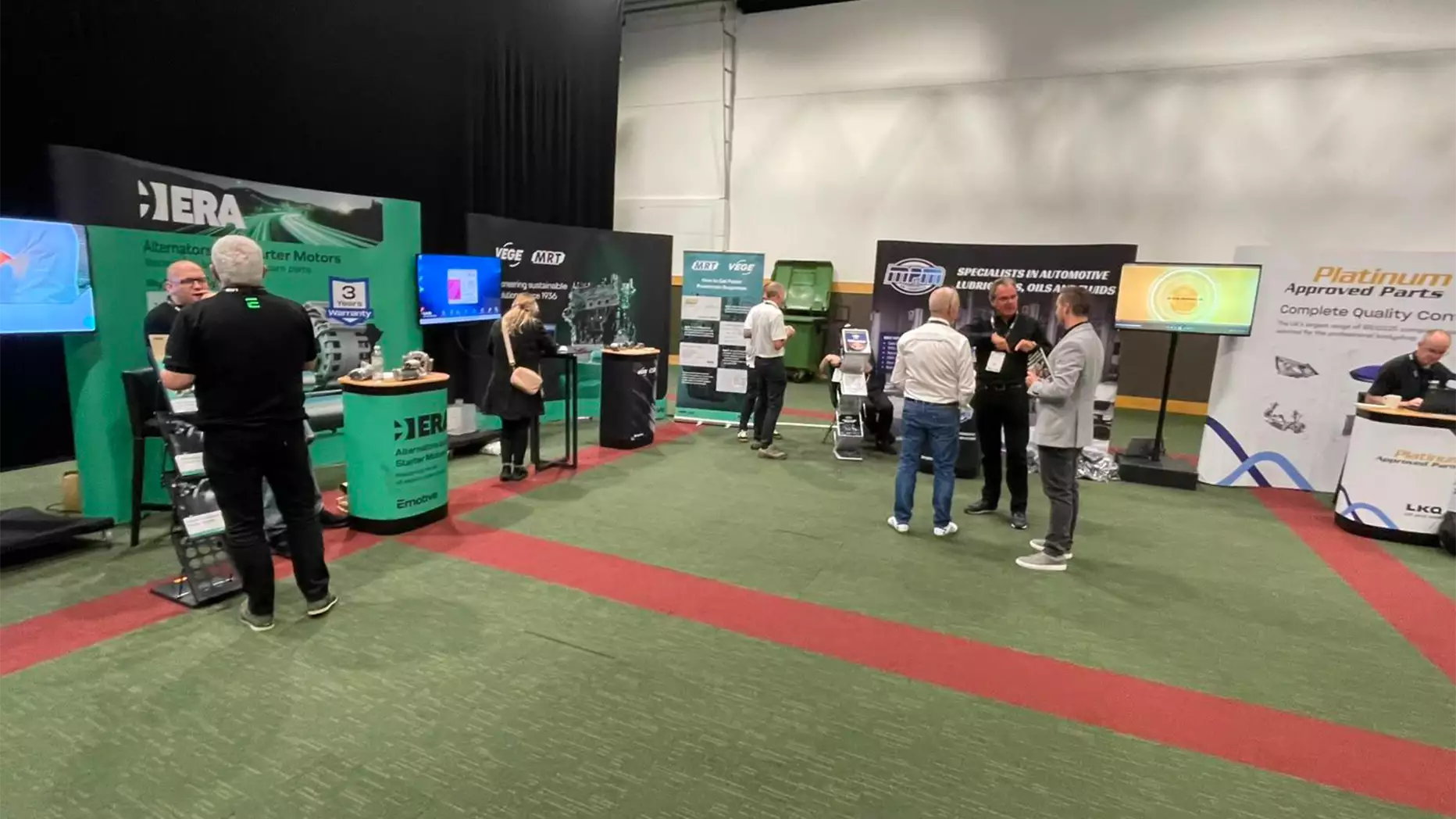
Do not budget each exhibition in isolation. Build one yearly template with clear line items for stand space, build, graphics, AV, logistics, travel, staffing, and contingency. The biggest savings usually come from reuse, joined-up planning, and multi-show supplier support.
If you are planning several UK exhibitions in 2026, your budget needs to work across the full year, not just one event at a time.
That is where many teams go wrong. They build one show budget, repeat it for the next one, and assume the numbers will still hold. On paper, that looks tidy. In practice, it creates gaps. One show ends up overfunded, another gets squeezed, and the whole event becomes harder to manage by mid-year.
A better approach is to build one yearly exhibition budget template and use it across every show in the calendar. That gives you a clearer view of where the money goes, where reuse makes sense, and where savings actually appear.
This guide covers the core budget lines to include, where costs are often underestimated, and how to plan a multi-show exhibition event more realistically in 2026.
Why an Event Budget Looks Different from a Show Budget
A one-show budget is useful when you only exhibit once or twice a year.
Once you start running several shows, the logic changes. You are no longer buying isolated pieces. You are building a repeatable exhibition event with shared assets, shared suppliers, and repeated operational decisions.
- Costs Become Strategic Choices
With one exhibition, the stand is often treated as a one-off cost.
With several exhibitions, the better question is whether you should use a shell scheme, a modular system, a custom build, or a mix of all three, depending on the event. That decision affects not only design but also storage, transport, graphics, labour, and future reuse.
- Reuse Starts To Matter
The more shows you run, the more value you get from reusable planning.
That might mean reusing parts of a modular stand, refreshing graphics instead of replacing everything, carrying furniture between events, or building one design system that adapts across venues and stand sizes.
- Contingency Works Better at Programme Level
A separate contingency on every show budget can make the full plan look padded.
A central contingency pot is often more practical. It gives you room to handle last-minute print changes, extra power, urgent freight adjustments, or unexpected venue requirements without inflating every line from day one.
The Core Line Items Every UK Exhibition Event Needs in 2026
The categories below work best as yearly planning lines, even if you still track spend show by show underneath them.
1. Stand Space (Floor Cost)
This is the floor space booked with the organiser.
For most exhibitors, it is one of the highest fixed costs in the budget and one of the earliest decisions to make. It also shapes everything else, from layout and stand type to staffing and visibility.
This line often gets underestimated when teams focus only on the square metre rate and forget the wider effect of position, open sides, and show tier.
When budgeting across the year, plan stand space as a strategic line, not just an organiser invoice.
2. Stand Design, Build, and Graphics
This is usually the highest creative and delivery cost in the event.
It includes the stand structure itself, whether that is a shell scheme dressing, modular build, or a more bespoke solution. It also includes printed graphics, branded panels, counters, fabric elements, display features, and any visual updates needed between shows.
This is also where year-level planning can save the most money. A stand built for reuse, or graphics designed to flex across different footprints, will usually perform better financially over multiple events than a fully fresh approach every time.
3. AV, Power, and Rigging
This line covers screens, lighting, sound, power supply, distribution, and on-stand technical support where needed.
This is one of the lines exhibitors most often get wrong. They quote ‘the AV’ but forget the venue charges around it, including power supply rental, distribution, testing fees, and rigging permits. AV and venue service costs are often underestimated because exhibitors focus on the visible equipment and overlook power, distribution, testing, rigging, and venue ordering deadlines. If your stand depends on demos, video, or digital interaction, plan this line early and confirm venue requirements well in advance.
Free venue Wi-Fi is rarely built for reliable stand operations, so live demos and lead-capture tablets may need hard-wired Ethernet, which should be priced into the show budget. As a planning guide, AV may need a higher allocation for live-demo stands than for display-led stands, but the final percentage should be based on venue requirements and supplier quotes.
4. Exhibition Furniture, and Flooring
This includes tables, stools, counters, soft seating, plinths, and glass display cases. Across multiple shows, furniture hire can become more efficient when it is planned centrally. For some exhibitors, hire remains the more practical option, while others may benefit from ownership where stand formats stay consistent across the year.
5. Logistics, Storage, and Handling
Transport, venue handling fees, customs costs if shipping from outside the UK, and inter-show storage all sit within this line. The logistics manager or operations lead should own it.
Handling, transport, and storage costs can add up quickly, especially across multiple venues. This line should be planned early rather than treated as a last-minute operational detail. Events moving materials between Glasgow, Leeds, Bristol, Birmingham and London need a single yearly transport plan, not five separate freight quotes.
6. Staff Costs (the line that gets missed)
This is one of the most commonly overlooked lines in exhibition budgeting.
Because the team is already employed, some businesses leave staff out of the event budget entirely. That gives a false view of what the event really costs.
A proper budget should account for staff time, travel days, accommodation where needed, meals, overtime, and the opportunity cost of having key people away from their usual work.
7. Marketing Spend Allocation
A strong exhibition event needs supporting marketing before, during, and after each show. That can include email campaigns, landing pages, social content, paid promotion, printed handouts, giveaways, QR-led call-to-actions, and follow-up content once the event ends.
This line is stronger when it is managed across the year. That way, you build one campaign system and adapt it for each show instead of starting again every time. Teams building this layer from scratch may also need a separate trade show event marketing plan, covering pre-show promotion, on-site engagement, and post-show follow-up.
8. Lead Capture & Tech
Badge scanners, organiser-supplied lead apps, CRM integration, tablets, charging stations, Wi-Fi rental, and any custom lead-capture technology all belong here. It is a small line, usually 1–3% of event spend, but one with a high impact on event ROI. Underspending here is what makes the rest of the budget impossible to evaluate later.
9. Hospitality
Coffee on the stand, lunches with key prospects, drinks events, and dinners all fall into this category. This line can vary widely, from 2% to 15% of event spend, depending on the industry. This line benefits most from being managed centrally: a single £20,000 yearly hospitality envelope, used where it matters most, beats £4,000 set aside for each of five shows, whether the audience justifies it or not.
10. Travel & Accommodation
Travel is simple to ignore when the first exhibition is close to home.
It becomes much more important when the event includes longer-distance shows, overnight stays, larger teams, or repeated trips over the year.
Keep this line separate so you can see how venue mix affects the total cost of the event.
11. Contingency
This is the line everyone agrees they need, yet most events still get it wrong. A 10–15% contingency held centrally, not as 10% on top of every individual line, is the version that actually works. It pays for late graphic changes, a venue power upgrade flagged at week minus three, and the fact that the organiser’s “shell scheme hire package” excluded the floor covering. None of these are unusual.
12. Installation, and Breakdown Labour
Build and breakdown labour should be a visible line in the budget, not hidden inside general stand costs.
That includes installation, removal, technical setup, graphics fitting, stand preparation, and any support needed on-site before opening or after closing.
This matters even more when your exhibition calendar includes different venue rules, different access times, and multiple stand formats throughout the year.
Where Do Year-Level Savings Actually Live?
Event-level savings cannot be priced into one show budget. They only show up when the year is planned as one unit. Four sources produce most of the saving available to a UK exhibitor in 2026.
- Early Booking Discounts
Most major UK organisers offer Early Booking Discount windows that close 9–12 months before each show, with discounts of 5–15% on space costs. For an event with £35,000 in yearly space spend, that is £1,750–£5,250 left on the table by exhibitors who book within 6 months of the door date. Early-booking deadlines need deposits of 25–50% on signing, easier to fund from a single yearly envelope.
- Multi-Show Supplier Contracts
The single biggest event-level lever. An exhibition supplier handling AV, furniture, build, and graphics across five UK shows for one client will usually price 10–25% below five separate per-show contracts because of shared transport routes, joined-up warehousing, and repeat use of the same prints.
- Graphic and Furniture Reuse Across Venues
A modular graphic set designed for ExCeL can usually be rearranged for Olympia, NEC, or Manchester Central with only fascia changes. A graphic reset can cost significantly less than a full reprint, especially when the original artwork has been designed for reuse. The discipline needs: design the first stand of the year for reuse.
- Joined-Up UK Logistics
An event running across London, Birmingham, Manchester, and Glasgow has a single transport route that a logistics supplier can plan as one yearly contract. The same four shows treated as separate freight bookings cost noticeably more. Trade show logistics cost planning is one of the lowest-glamour decisions and one of the highest-leverage.
Measuring ROI at the Event Level (Not the Show Level)
Per-show ROI misleads the moment your event has more than two shows. A high-cost flagship at ExCeL London might show worse cost-per-lead than a regional show at Manchester Central but produce ten times the closed-deal value six months later. Looking at each show in isolation makes the regional show look like the winner. Looking across the event shows the truth.
- Event Cost Per Qualified Lead
Total yearly event spend divided by total qualified leads (the ones that became opportunities, not raw badge scans) across all shows. Year-on-year, it should trend down as your team gets better and reusable assets carry forward.
- Share Of Pipeline From The Event
The percentage of yearly sales pipeline (or closed-won revenue) where the exhibition contact appears in the touch sequence. In many sectors, exhibitions can influence a meaningful share of pipeline when they are treated as a core channel rather than a one-off activity.
- Event Efficiency Ratio
Year-two cost per qualified lead divided by year-one cost per qualified lead, with reusable assets on the cost side. A well-run event should see this ratio drop year-on-year. If it stays flat or rises, the event is not paying back its build costs.
Bringing It Together
Building a 2026 UK exhibition event budget is not the same as costing one show five times over. It is one yearly plan, organised around twelve recurring line items, anchored in the standard space/build/operations split, supported by a central contingency.
The discipline that separates good exhibit managers from great ones is rarely about getting better quotes; it is about building the budget at the right level. Our overview of essential insights for exhibit managers covers how budgeting fits alongside those other responsibilities.
Whether your 2026 event runs four shows or fourteen, across ExCeL London, NEC Birmingham, Manchester Central, Olympia, or further afield in Glasgow, Leeds, or Bristol, the structure stays the same.
If you are planning multiple exhibitions in 2026 and want help building the right stand, graphics, AV, furniture, and delivery plan around your budget, contact the EMS Exhibitions team.
FAQs
How Should You Budget For Multiple Exhibitions In One Year?
Start with one yearly template rather than separate, stand-alone show budgets. Build clear line items for stand space, build, graphics, AV, logistics, travel, staffing, marketing, and contingency, then track each show underneath that structure.
How early should you book stands for a 2026 UK exhibition event?
Most UK organisers’ Early Booking Discount windows close 9–12 months before each show, with discounts of 5–15% on space costs. For a 2026 event, have the full year’s schedule confirmed by November or December 2025, with deposits paid through Q1 2026. Events that book within six months of door dates miss the discount and lose preferred stand positions.
Why Do Exhibition Budgets Often Go Over Plan?
The most common reasons are late design changes, underestimated logistics, missing labour costs, underplanned power or AV needs, and poor visibility over the full programme.
Should Contingency Sit In Every Show Budget?
It is usually more practical to hold contingency at the event level. That gives you more control and makes it easier to use the budget where it is genuinely needed.
How do you calculate cost per lead across a multi-show exhibition event?
Total yearly event spend divided by total qualified leads (the ones that became opportunities) across all shows in the year, not per show. For many UK B2B exhibitors, cost per qualified lead can vary widely by sector, stand size, audience quality, and sales cycle.